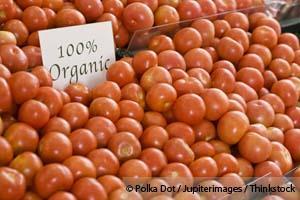
Tomatoes, which are actually a fruit and not a vegetable, contain a number of valuable nutrients, and according to recent research, organically-grown tomatoes are even more nutritious than their conventionally-grown counterparts.
One of the most well-known nutrients in tomatoes is lycopene — the compound that gives tomato its deep red color.
Lycopene is a vital anti-oxidant that has been shown to have potent anti-cancerous activity. This compound is not naturally produced in your body, so it must be supplied via your diet.
Other fruits and vegetables also contain lycopene, but none has the high concentration of lycopene that the tomato boasts.
Interestingly, when cooked, the bioavailability of lycopene increases rather than decreases, as is the case with many other raw foods, as heat has a tendency to destroy valuable nutrients.
That said, you’re best off avoiding canned tomatoes and tomato sauces as can liners tend to contain potent estrogen mimics such as bisphenol A (BPA), which is also a toxic endocrine disrupting chemical.
The conventional tomatoes were significantly larger. However, while many unaware consumers equate size with quality, this simply isn’t the case. At least in the case of organic tomatoes, you get more even though it’s in a smaller “package.”
This does tend to hold true for other organic produce as well though. According to research published in 2009, American produce, while larger than ever before, contains fewer nutrients and tastes worse than it did in your grandparents' days.
In fact, the average vegetable found in today's supermarket is anywhere from 5 percent to 40 percent lower in minerals such as magnesium, iron, calcium and zinc than those harvested just 50 years ago. As the featured study suggests, jumbo-sized produce contains more "dry matter" than anything else, which dilutes mineral concentrations.
In fact, the average vegetable found in today's supermarket is anywhere from 5 percent to 40 percent lower in minerals such as magnesium, iron, calcium and zinc than those harvested just 50 years ago. As the featured study suggests, jumbo-sized produce contains more "dry matter" than anything else, which dilutes mineral concentrations.
According to a recent study published in the journal PLOS One,1 growing tomatoes according to organic standards results in dramatically elevated phenols content, compared to tomatoes grown conventionally, using agricultural chemicals.
The researchers compared total phenol content in organic and conventional tomatoes grown in nearby plots in Brazil. This allowed for a more accurate comparison of the tomatoes, as both varieties were grown in similar soil- and climate conditions that might otherwise affect nutrient content.
According to the authors:
“This study was conducted with the objective of testing the hypothesis that tomato fruits from organic farming accumulate more nutritional compounds, such as phenolics and vitamin C as a consequence of the stressing conditions associated with farming system.”
The organic tomatoes were found to contain 55 percent more vitamin C, and 139 percent more total phenolic content at the stage of commercial maturity, compared to the conventionally-grown tomatoes. According to the authors:
“[T]his seems consistent with the more than two times higher activity of phenylalanine ammonia lyase (PAL) we observed throughout fruit development in fruits from organic farming.
Taken together, our observations suggest that tomato fruits from organic farming experienced stressing conditions that resulted in oxidative stress and the accumulation of higher concentrations of soluble solids as sugars and other compounds contributing to fruit nutritional quality such as vitamin C and phenolic compounds.”
Tomatoes differ from many other raw foods in that cooking them may in fact be better than eating them raw. Research shows that cooked tomatoes (such as in tomato sauce or tomato paste) not only increases the lycopene content that can be absorbed by your body, but also increases the total antioxidant activity. In one study, when tomatoes were heated to just over 190 degrees F (88 degrees C) for two minutes, 15 minutes and 30 minutes:
- Beneficial trans-lycopene content increased by 54 percent, 171 percent and 164 percent, respectively
- Levels of cis -lycopene (which is a form easily absorbed by your body) rose by 6, 17 and 35 percent, respectively
- Overall antioxidant levels increased by 28, 34 and 62 percent, respectively
one of the most potent sources of lycopene, shown to have anti-cancerous activity and the potential to reduce stroke risk. Just remember to consume your tomatoes, whether raw or cooked, with some type of fat, such as olive oil, since lycopene is a fat-soluble nutrient. Also remember to choose organic varieties, whether whole tomatoes or tomato paste, ketchup or sauce, and avoid anything that comes in a can, since the acidity of the tomatoes will increase toxic BPA release from the liner in the can.

